Encountering the Buddha as Teacher
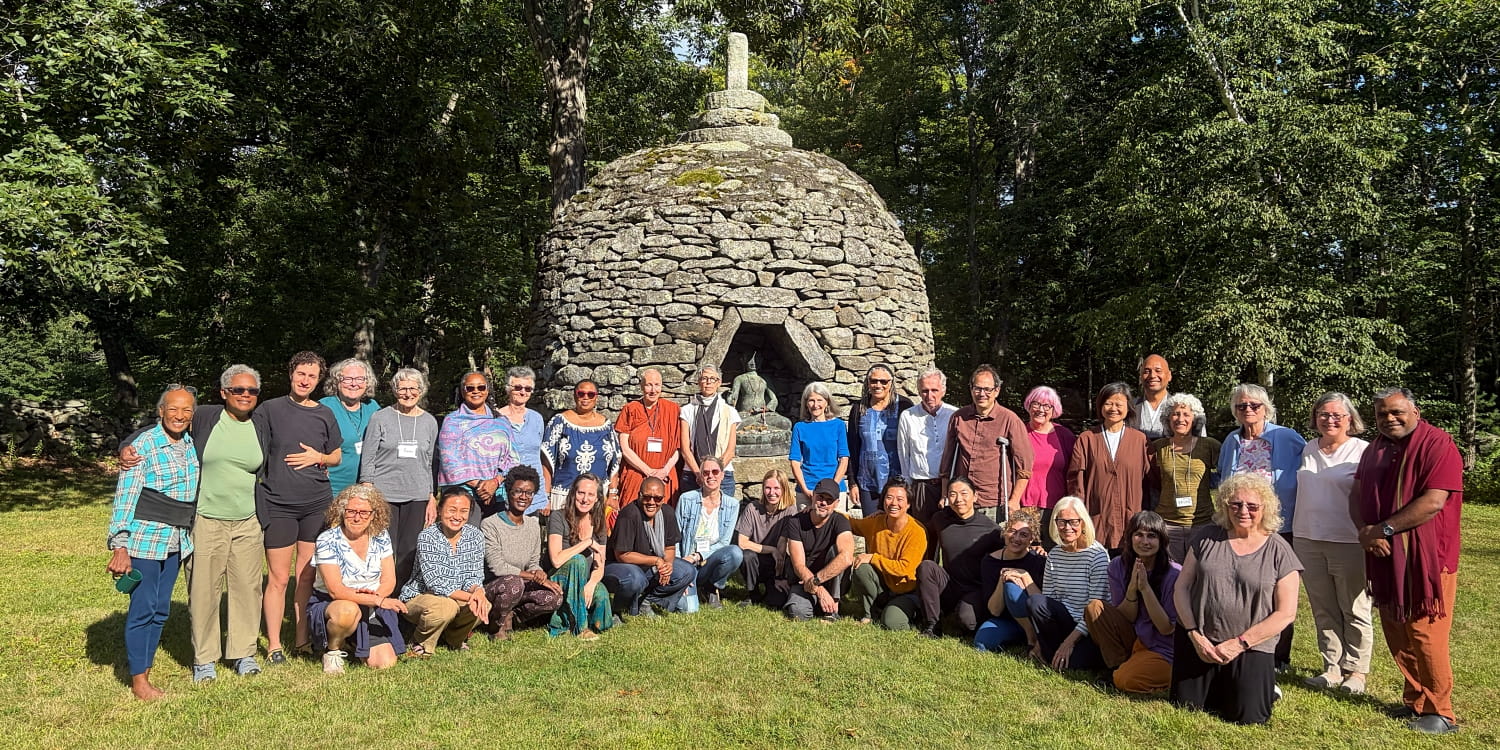
 What if the Buddha isn’t simply a teacher who lived 2,600 years ago, but someone who is still speaking to us today? This was the question at the heart of our recent retreat with Charles Hallisey at the Barre Center for Buddhist Studies. BCBS offered this retreat for dharma teachers and teacher trainees, mostly from IMS and Spirit Rock. Over five days together, Charlie invited us to read the suttas not simply as historical documents, but as an encounter with a mentor we love and trust.
Part of what made this possible was Charlie’s invitation to hold two ways of reading the suttas together. On the one hand, every sutta is already an interpretation of what someone heard when the Buddha spoke. The context, community, clan, and culture in which the Buddha taught were essential to the stories, similes, and lessons he offered. On the other hand, Charlie invited us to read scripturally, to encounter the Buddha not simply as a historical figure, but as our own teacher. There was something remarkable about inhabiting the Buddha’s world more fully while simultaneously feeling his presence in ours. The more we understood the people, culture, and circumstances in which he taught, the more we could hear him speaking directly to us, here and now.
This way of reading invited us to deepen our relationship with the Buddha as teacher, even as emancipator, whose words continue to shape how we practice, live, and teach. Charlie’s own love for the suttas, and his love of life, were infectious. We left with a deeper sense of what it means to take refuge in the Dhamma and to live, as best we can, within the precepts.
Both of us were also struck by the deeply dialogical nature of the retreat. Yes, Charlie lectured, and his lectures were brilliant, but what was even more interesting was the way, over five rich days, we made meaning together as a community. A kind of call and response began to take shape in which the teachings came alive through our conversations. Many suttas begin with the words evaṃ me sutaṃ—”Thus have I heard.” Over the course of the retreat, those words took on new meaning. Each of us was hearing the Buddha through the particular circumstances of our own lives, just as others had heard him centuries before. The Dhamma was not simply being passed down to us; it was coming alive through our listening.